



20 Mar What Happens to Your Brain During a Float Tank Session?
Floatation therapy is often described as one of the deepest relaxation experiences available today. Many people step out of their first float session feeling calm, mentally clear, and surprisingly refreshed.
But what is happening inside the brain during a float tank session?
Over the past decade, neuroscientists and researchers have begun studying floatation therapy more closely. Their findings suggest that floating has powerful effects on the brain, nervous system, and mental state.
In fact, the float tank creates a neurological environment that is very difficult to replicate anywhere else.
The Brain Is Constantly Processing Information
Under normal circumstances, the human brain is overwhelmed with sensory information.
At any given moment your brain is processing:
- sounds
- light
- physical pressure from gravity
- temperature changes
- movement
- visual stimuli
- internal thoughts and emotions
The brain receives millions of sensory signals every second. Most of the brain’s energy is spent simply processing this incoming information.
This constant activity is one reason modern life can feel mentally exhausting.
Floatation Therapy Reduces Sensory Input
A float tank dramatically reduces the amount of sensory information reaching the brain.
Inside a float tank:
- the water matches skin temperature
- gravity pressure on the body disappears
- light is minimized or eliminated
- sound is greatly reduced
- physical movement becomes minimal
This environment is known scientifically as Reduced Environmental Stimulation Therapy (REST).
When sensory input drops, the brain no longer needs to dedicate as much energy to interpreting the external world.
This allows the brain to shift into a different state of activity.
Brain Waves Begin to Slow Down
One of the most interesting changes that occurs during a float session involves brain wave patterns.
The brain communicates using electrical signals that operate at different frequencies, often referred to as brain waves.
In everyday waking life, most people operate in Beta brain waves, which are associated with active thinking, problem solving, and stress.
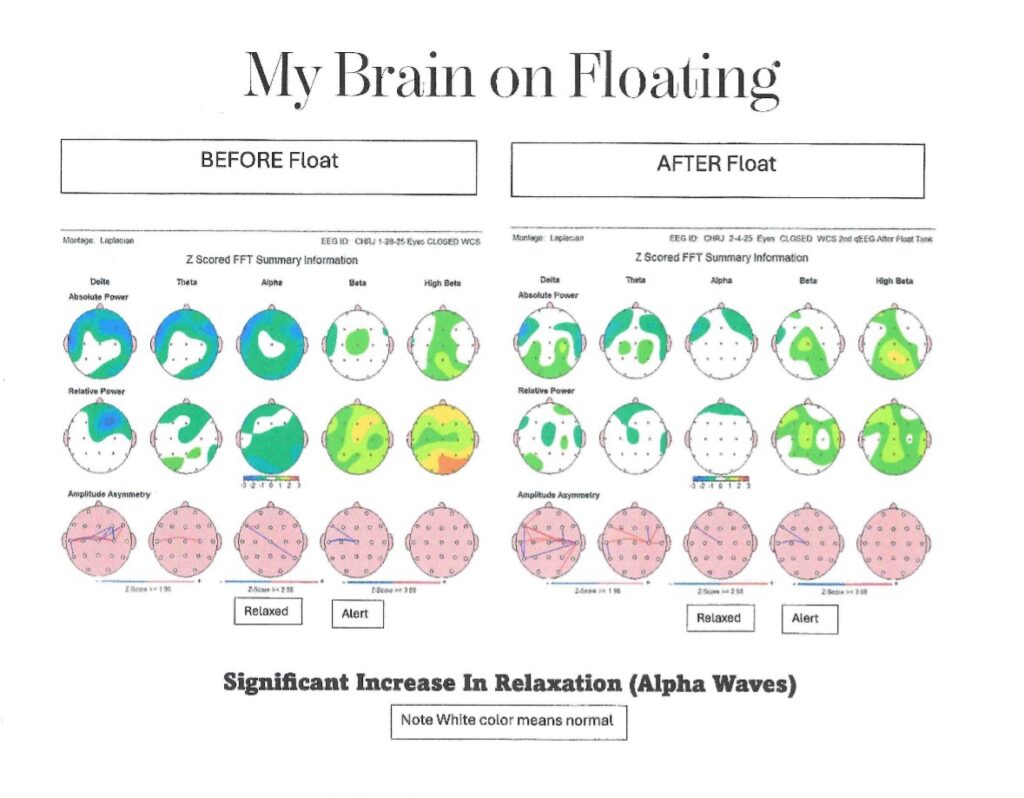
During relaxation and meditation, the brain begins shifting toward slower patterns such as Alpha and Theta waves.
Research suggests that floatation therapy encourages the brain to move into these slower brain wave states.
These states are associated with:
- deep relaxation
- creative thinking
- meditation
- memory consolidation
- emotional processing
Many floaters report entering a state that feels similar to the moment just before falling asleep—deeply relaxed, but still aware. The owner of Synergy Float Spa had his brain mapped before a float and after. Below are the results.
 The Nervous System Shifts Into Recovery Mode
Floatation therapy also affects the autonomic nervous system, which regulates stress and recovery.
The nervous system operates through two main modes:
Sympathetic Nervous System
(fight-or-flight response)
Parasympathetic Nervous System
(rest-and-recovery response)
Modern life often keeps people stuck in the sympathetic stress response due to work pressure, technology, and constant stimulation.
Floatation therapy helps activate the parasympathetic nervous system, which promotes:
- slower heart rate
- deeper breathing
- muscle relaxation
- reduced stress hormone production
This shift is one reason many people experience such deep calm during a float session.
The Brain Becomes More Internally Focused
When the brain receives less sensory input from the outside world, it often begins directing attention inward.
This phenomenon is sometimes called interoceptive awareness, meaning increased awareness of internal thoughts, emotions, and sensations.
During a float session, many people notice:
- heightened self-awareness
- vivid visualization
- creative ideas
- emotional clarity
- deeper meditation states
For some individuals, the float tank becomes a powerful environment for introspection and mental clarity.
Magnesium and Neurochemical Effects
Float tanks contain extremely high concentrations of Epsom salt, which is composed primarily of magnesium sulfate.
Magnesium plays an important role in the nervous system and has been associated with:
- muscle relaxation
- reduced inflammation
- improved sleep quality
- stress reduction
Although research is ongoing, some scientists believe magnesium absorption through the skin may contribute to the relaxing effects of floating.
Even without that factor, the physical relaxation caused by floating has clear neurological benefits.
Creativity and Insight Often Increase
Another interesting phenomenon reported by frequent floaters is an increase in creativity and insight.
When the brain enters slower Alpha and Theta states, it becomes easier to form connections between ideas that normally remain separate during busy waking consciousness.
Many writers, entrepreneurs, and artists use floatation therapy as a way to:
- solve complex problems
- generate new ideas
- gain perspective on challenges
The quiet mental environment of the float tank allows the brain to operate without constant interruptions.
Why Floating Feels So Restorative
One way to think about the brain during a float session is that it is finally given permission to rest from processing the outside world.
With fewer sensory signals to manage, the brain can redirect its energy toward internal maintenance and recovery.
Many people describe leaving a float session feeling as if their mind has been “reset.”
This is one reason floatation therapy is increasingly used by athletes, high performers, and individuals seeking stress relief.
Floating, Consciousness, and Inner Exploration
Beyond physical relaxation and stress reduction, floatation therapy has also attracted interest from those exploring meditation and consciousness.
The unique sensory environment of the float tank makes it easier for some individuals to reach deep states of awareness and introspection.
These experiences have inspired research into how sensory-reduction environments may influence perception and consciousness.
Themes like this are explored in the book Veilwalker, which examines how floatation therapy and similar environments can create conditions that support deeper self-exploration and awareness.
Experience the Float Tank for Yourself
Understanding the science behind floatation therapy is fascinating—but the experience itself is what truly changes people’s perspective.
At Synergy Float Center in Alexandria, Virginia, and Synergy Float Spa on Florida’s Space Coast, floatation therapy is designed to help people reset their nervous systems, reduce stress, and reconnect with themselves.
Many first-time clients leave their float session surprised by how quiet their mind becomes and how deeply relaxed their body feels.
Sometimes the best way to understand what happens to the brain in a float tank is simple:
Step inside, close the lid, and allow yourself to float.